Table of Contents
- 1 Why Hongdae Is Different From Any Other Neighborhood in Seoul
- 2 It All Started With Art School — The Hongik Effect
- 3 Step Outside the Classroom — Music and Indie Culture
- 4 The Izakaya Night I Still Think About
- 5 When It Gets Too Loud, Walk 20 Minutes to the Han River
- 6 Practical Guide — Visiting Hongdae
- 7 FAQ About Hongdae
Why Hongdae Is Different From Any Other Neighborhood in Seoul
If you search for a Hongdae guide online, you’ll find dozens covering the same ground — clubs, busking, shopping, themed cafes.
I can talk about this neighborhood from a different angle. I graduated from the fine arts program at Hongik University, and I spent close to five years here, from my student days through life after graduation. That’s not a few days as a tourist — that’s living inside the daily rhythm of the place. So instead of another “things to do in Hongdae” checklist, I want to start with what actually built this neighborhood in the first place.
It All Started With Art School — The Hongik Effect
How Hongik University’s Art Program Shaped the Neighborhood
The name “Hongdae” itself comes from Hongik University. And Hongik’s fine arts program is genuinely well-known across Korea. Design, fine art, sculpture — these departments produce a huge number of graduates every year, and a lot of them never actually leave the area once they’re done.
The reason is simple. You need a place to work, and staying near people who understand what you’re doing just makes sense. So graduates started renting out studio spaces in the surrounding alleys, opening small galleries, starting their own clothing lines and design shops. If you trace the roots of a lot of stores currently filling Hongdae, you’d be surprised how many started in the hands of art school graduates.
The Day I Brought a Foreign Friend Into My Old Studio
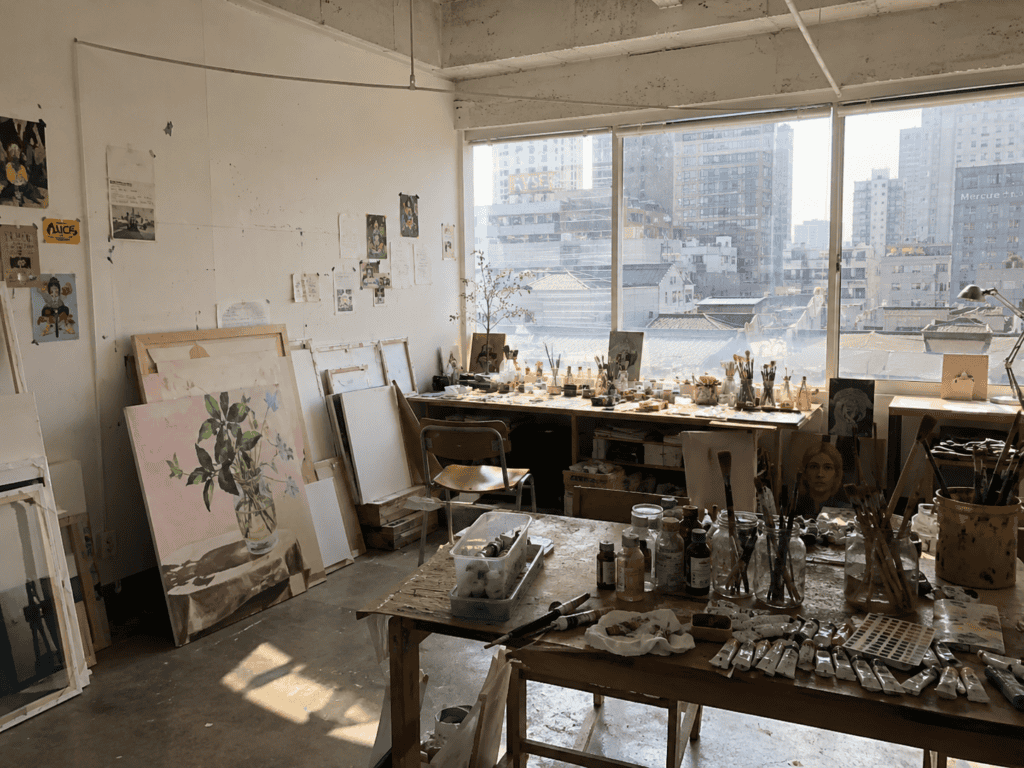
When a friend from abroad visited Korea, instead of taking her to a typical tourist spot, I showed her my old studio — the fine arts space I used as a student, one I could still drop into occasionally even after graduating.
Her eyes widened the moment she walked in. Canvases leaning against the walls, paint tubes and brushes scattered everywhere, other students’ work spread out across the room. Seeing what Korean art students actually work on felt, to her, like wandering through a small gallery. She spent over an hour walking around, pointing at things and asking, “What’s this one about?”
That’s obviously not an experience the average traveler gets. But walking through Hongdae’s alleys, you can pick up traces of that same energy — small galleries, shops run by students, places selling design work made by people still figuring out their craft. It all comes from the same root.
Step Outside the Classroom — Music and Indie Culture
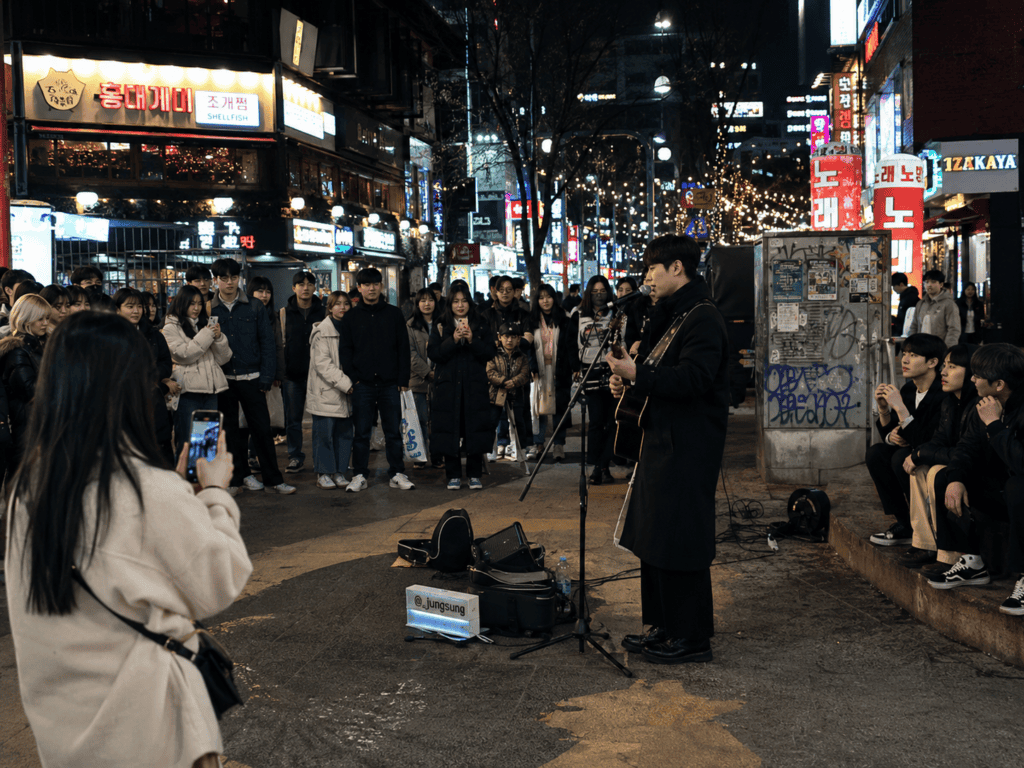
As art students filled the neighborhood, music followed naturally. People with similar sensibilities tend to cluster together, and musicians were drawn in right alongside the artists. Performing in clubs, busking on the street, playing original songs in tiny live bars.
That combination is exactly why Hongdae is often called the center of youth culture in Korea — fashion, food, music, and art, all running at the same time in one neighborhood. I don’t think there’s another area in Korea quite like it.
Hongdae Walking Street at Night
Once evening hits, Hongdae’s main street fills with buskers. Singers, dance crews, and occasionally a group of trainees performing before their official debut. The street itself turns into a kind of open-air stage.
The Small Galleries and Design Shops Still Hiding Here
Tucked between the bigger franchise stores, you’ll still find tiny galleries and design shops run by current students or graduates. These spots — not the major tourist attractions — are where Hongdae’s real character still lives.
The Izakaya Night I Still Think About
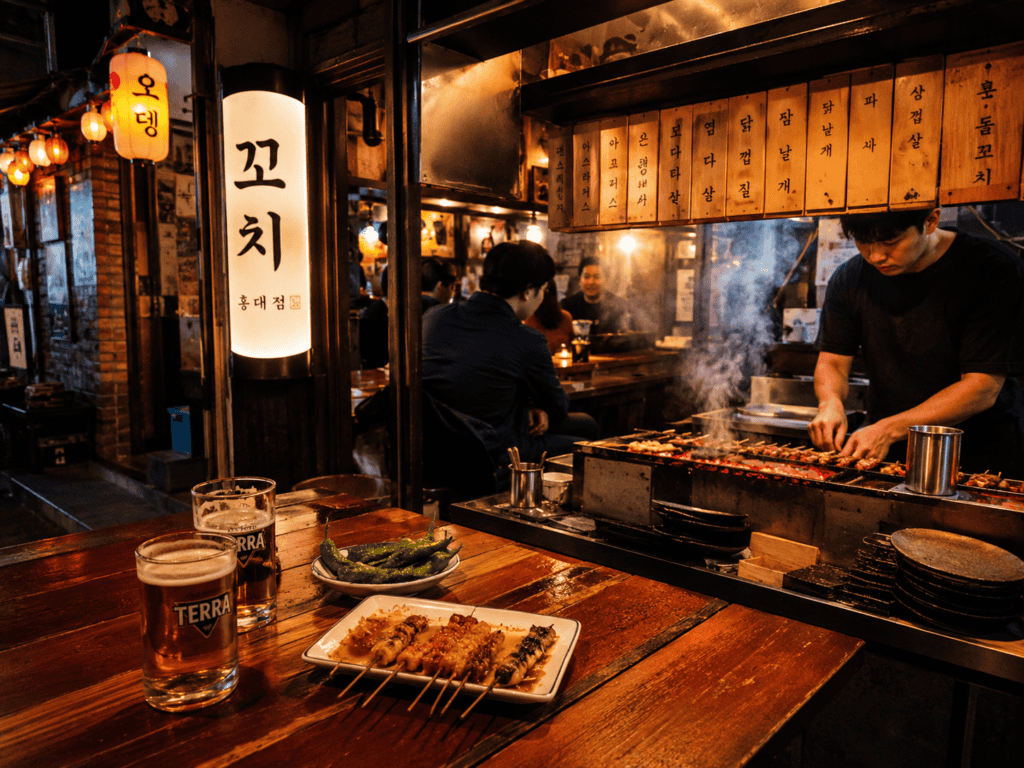
I once took a friend visiting from abroad to an izakaya tucked into one of Hongdae’s alleys. We ordered a few skewers, some noodles, and beer. She loved it — she said Korean-style izakaya felt different from the ones back in Japan, but somehow it worked just as well.
That night was really just a few skewers, a beer, and watching people pass by outside the window — but she told me it was the part of her Korea trip she remembered most. We ended up talking again about the studio from earlier that day. She kept saying it was strange how the quiet studio in the afternoon and the lively izakaya alley at night could exist in the exact same neighborhood.
When It Gets Too Loud, Walk 20 Minutes to the Han River
There’s a small secret locals know about Hongdae — the Han River is only about a 20-minute walk away.
Back when I was a student, if I’d been out in Hongdae long enough and the noise started to get to me, I’d just walk toward the river. A few minutes away from the club music and crowded alleys, and suddenly you’re surrounded by people jogging and walking slowly along the riverside. The contrast is almost surreal — like flipping a switch from loud to quiet.
Foreign friends are always surprised when I mention this route. “Wait, you can see the Han River right after Hongdae?” Yes, genuinely. So if Hongdae ever feels like too much, don’t push through it — just walk toward the river. Those 20 minutes can completely reset your mood for the rest of the day.
Practical Guide — Visiting Hongdae
How to Get There
Hongdae sits right on Seoul Subway Line 2, at Hongik University Station. The airport railway (AREX) also stops at the same station, which makes it especially convenient if you’re heading straight from Incheon or Gimpo Airport with luggage in tow.
Best Time to Visit
Daytime Hongdae and nighttime Hongdae are essentially two different neighborhoods. If you want the calmer studio-and-gallery atmosphere, go in the early afternoon. If you want the busking and club energy, come after dark.
If It Feels Like Too Much
Weekend nights in Hongdae get genuinely crowded. If you want something a bit calmer with a similar vibe, the neighboring areas of Yeonnam-dong or Hapjeong are worth checking out instead.
FAQ About Hongdae
Why is Hongdae famous?
The artistic energy that started with Hongik University’s fine arts program spread throughout the neighborhood, and music and club culture grew on top of that foundation, shaping the Hongdae you see today.
Is Hongdae only about clubbing?
Not at all. Clubs and busking dominate at night, but during the day, Hongdae has a completely different character built around galleries, design shops, and cafes.
Can you really walk from Hongdae to the Han River?
Yes, it takes about 20 minutes. If Hongdae starts feeling too loud or crowded, walking toward the river completely changes the atmosphere.
What’s the best time to visit Hongdae?
Afternoons offer a calmer experience, while evenings bring out the nightlife energy. Pick your timing based on which side of Hongdae you want to see.
Where should I go if Hongdae feels too crowded?
The neighboring areas of Yeonnam-dong and Hapjeong offer a similar atmosphere with a more relaxed pace.
Do you have a memory or experience from Hongdae? Share it in the comments below!
Chimaek — Korean Chicken and Beer: The Culture Even Jensen Huang Can’t Resist
Why Korean Convenience Stores Are So Popular?
Seoul Travel Tips: A Beginner’s Guide for First-Time Visitors