Table of Contents
- 1 Korean Head Spa in Seoul: Is It Worth the Viral Hype?
- 2 What Exactly Is a Korean Head Spa?
- 3 What Actually Happens During a Full Korean Head Spa Session?
- 4 Honest Review: The Good, the Bad, and What It Actually Does
- 5 Pricing Guide and Booking Tips for Visitors
- 6 So Who Actually Needs a Korean Head Spa?
- 7 Frequently Asked Questions
- 8 Before You Leave Seoul
- 9 Related Articles
Korean Head Spa in Seoul: Is It Worth the Viral Hype?
You have probably seen the videos. A glowing ring of warm water pouring gently over someone’s forehead, a therapist working through layers of scalp buildup with satisfying precision, and then the microscopic before-and-after shots of hair follicles that make your own scalp feel immediately suspicious. It looks incredible. And honestly, it kind of is.
I am Korean, and I spent over ten years living in Europe — mostly in Germany, Italy, and the Netherlands. The hard water abroad was brutal on my scalp. By the time I came back to Seoul, I had been dealing with persistent itchiness, flakiness, and noticeable hair thinning for years. I had tried every shampoo I could find in European pharmacies. Nothing really fixed it.
The first time I walked into a Korean head spa after coming home, it was not a trendy experience I was ticking off a list. It felt more like a medical reset. My scalp had been neglected for years without me fully realising it, and one session made that very clear.
If you are visiting Seoul and wondering whether to book one — or if you are just curious what actually happens inside — this guide covers everything you need to know.
What Exactly Is a Korean Head Spa?
The “skinification” of hair care
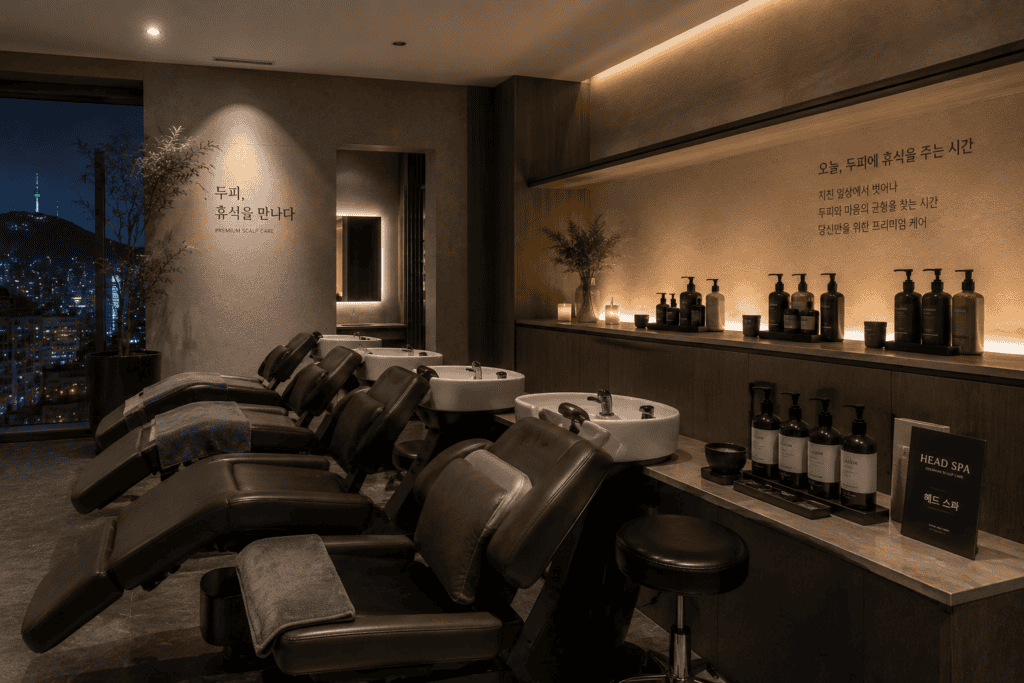
If you have spent any time looking into Korean skincare, you will have come across the idea that layering, hydration, and barrier protection matter more than any single product. Korean head spas apply exactly the same logic — but to your scalp. The idea is simple: your scalp is skin. It has pores that get clogged, a moisture barrier that can be damaged, and a microbiome that reacts to what you put on it and what you eat.
In Korea, scalp care has been treated as a serious part of personal health for a long time. The head spa experience grew out of that culture — not as a luxury add-on, but as something closer to a deep-cleaning facial for the skin you never think about.
Why regular shampooing is not enough
Here is something worth understanding before you book: a standard shampoo, even a good one, removes surface-level oil and dirt. What it does not do is clear the buildup that accumulates around the hair follicles over months or years. Product residue, dead skin cells, sebum oxidation, and environmental pollutants work their way into the scalp in ways that regular washing simply cannot address. Korean head spas use professional-grade tools and exfoliating treatments to get at that deeper layer — the part that determines whether your hair grows healthily or not.
For me, years of hard water in Europe had left mineral deposits on my scalp that I had not even considered as a possible cause of my hair thinning. The difference after one proper treatment was enough to make it a regular part of my routine.
What Actually Happens During a Full Korean Head Spa Session?
This is the part most people want to know before they walk in. Premium salons often market their services as a 15-step or 18-step protocol — and technically they are, once you break down every micro-step. In practice, the experience follows six major phases, and here is what each one actually feels like from the inside.
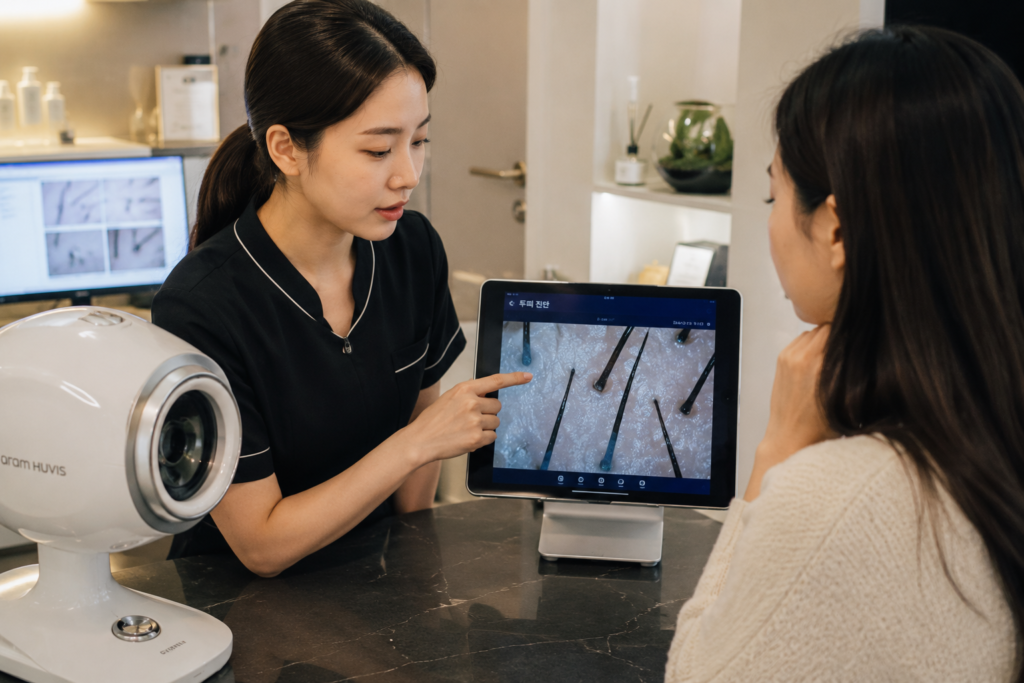
Step 1: Microscopic scalp analysis
Before anything else, a therapist uses a high-magnification camera to examine your scalp on a screen. You get to see exactly what is going on — follicle health, sebum levels, inflammation, buildup. For most foreign visitors, this is genuinely surprising. Most people have never seen their scalp at that level of detail, and it gives the therapist a clear picture of what your scalp actually needs. It also makes the whole experience feel much more clinical than cosmetic.
Step 2: Scalp scaling and exfoliation
This is where the real work begins. A specialised solution is applied to loosen and dissolve buildup around the hair follicles. The therapist then uses tools to gently scrape and lift the residue, clearing the follicles in a way that feels strange the first time but becomes deeply satisfying. Think of it as the scalp equivalent of a facial extraction. It is not painful, but you will feel it working.
Step 3: Steam and aromatherapy
After exfoliation, warm steam opens the pores further and allows treatment products to absorb more effectively. Many salons combine this with aromatherapy — eucalyptus and peppermint are common — which adds a sensory layer to what is already a very relaxing process. This is the part where most people stop thinking about anything stressful and just give up trying to stay alert.
Step 4: Customised scalp treatment
Based on the initial analysis, the therapist applies targeted products — scalp serums, hydrating masks, or strengthening treatments depending on what your scalp needs most. This is where Korean head spas differ significantly from a standard hair treatment. The products are chosen for your specific scalp condition, not just your hair type.
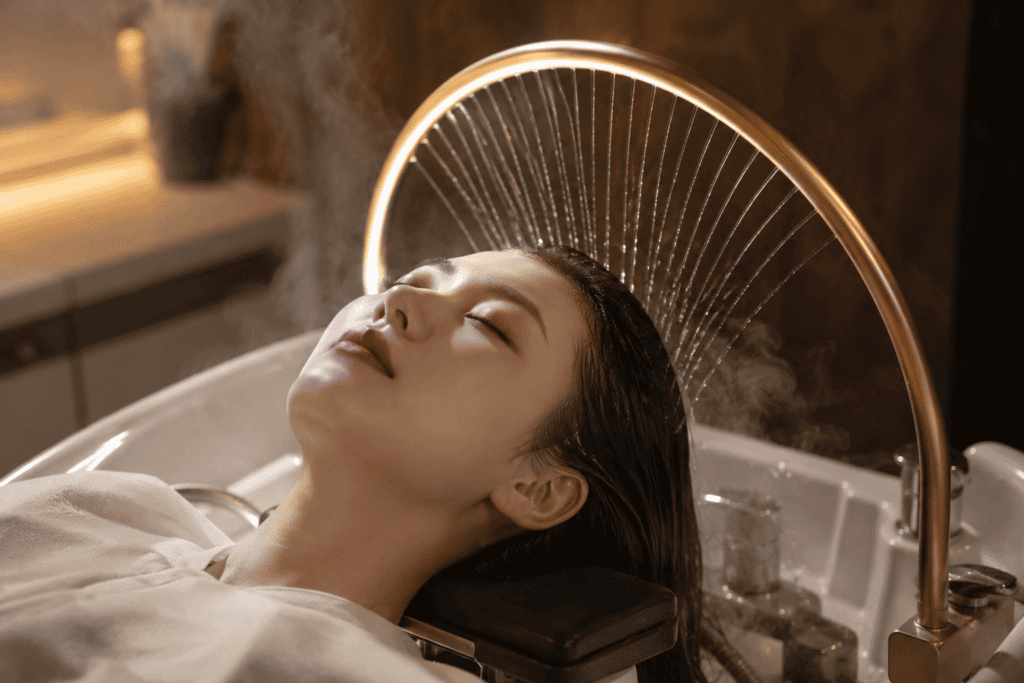
Step 5: The iconic water halo
This is the moment from all those viral videos. A circular ring with dozens of small nozzles pours a continuous curtain of warm water around and through your hair, rinsing everything away while creating a genuinely meditative sensation. It is hard to describe accurately. The closest I can come is: imagine every bit of tension leaving your head at once. It sounds like marketing language, but it is actually what happens.
Step 6: Scalp massage and finish
The session ends with a scalp and neck massage, followed by a final rinse, blow-dry, and another microscopic check to show you the difference. The before-and-after photos are genuinely striking — cleaner follicles, reduced redness, visibly more even scalp texture.
(Note: While some premium salons break this down into a 15-step or 18-step protocol on their menu, the core experience follows these six major phases. The additional steps are typically sub-steps within each phase — things like the specific order of product application or the number of rinse cycles — rather than entirely separate stages.)
Honest Review: The Good, the Bad, and What It Actually Does
Let me be direct about this, because there is a lot of hype around Korean head spas and not all of it is realistic.
What it genuinely does well
One session will not stop hair loss or reverse years of damage. Anyone who tells you otherwise is overselling. What a Korean head spa actually does exceptionally well is reset. It clears accumulated buildup, rebalances the scalp’s oil production, reduces inflammation, and creates the conditions for healthier hair growth. Think of it less as a cure and more as a deep clean — one that your scalp probably needed months ago.
For people who colour or bleach their hair frequently, a Korean head spa is particularly worth the investment. Chemical treatments leave residue and disrupt the scalp’s moisture barrier in ways that accumulate over time. A proper scalp treatment helps undo some of that. Several of my European friends who visit Seoul specifically book head spa appointments for this reason.
For travellers, the post-flight recovery value is real. After long-haul travel, your scalp is dry, your circulation is sluggish, and your stress levels have done nothing good for your hair. A head spa on arrival or in the first day or two of your trip makes a noticeable difference.
The honest limitations
One session is a reset, not a transformation. To see lasting results — particularly for scalp conditions like chronic flakiness or ongoing hair thinning — regular sessions are necessary. The therapists will usually recommend monthly visits, which is genuinely the ideal frequency if you have specific concerns.
The price can also feel steep for a first-timer who is not sure what to expect. If you are visiting Seoul for a short trip and budget is a consideration, prioritise a mid-range session rather than the cheapest option available. The difference in quality between a basic and a proper full treatment is significant.
Pricing Guide and Booking Tips for Visitors
What to expect to pay
Prices vary depending on the salon, location, and length of the session. Here is a realistic breakdown based on current Seoul pricing.
| Tier | Duration | Price Range | What’s Included |
|---|---|---|---|
| Budget-Friendly | 60 min | $70 – $90 | Basic scaling and scalp wash |
| Mid-Range (Best Value) | 90 min | $100 – $130 | Full 15-step treatment with water halo |
| Premium Luxury | 120 min+ | $150 – $180+ | Stem cell treatment, premium products |
Gangnam and Cheongdam luxury salons — the kind where K-pop celebrities go between schedules — tend to sit at the higher end, and honestly the ambience alone justifies some of that price. If you want local-approved, English-friendly options without the premium postcode markup, Hongdae and Myeongdong offer the best mid-range value and are well set up for international visitors. Avoid the very cheapest options in heavy tourist areas — they often cut corners on treatment steps and use lower-quality products, which defeats the purpose entirely.
How to book if you do not speak Korean
This is the part that stops a lot of visitors from following through. Naver reservations — the standard booking system in Korea — are entirely in Korean and can feel impenetrable if you cannot read Hangul. Here is what actually works.
Online travel booking platforms that support English or global payment methods are the most straightforward options for first-timers — they list verified salons, show fixed pricing, and include reviews from international visitors. Many salons in areas popular with tourists — Hongdae, Myeongdong, Gangnam — also accept Instagram DM bookings and have staff who communicate via WhatsApp or KakaoTalk in English.
One thing worth knowing: there is no tipping culture in Korea. Do not tip your therapist. Pay the listed price and nothing more — tipping can cause genuine confusion and is not expected or necessary.
So Who Actually Needs a Korean Head Spa?
Honestly? Probably you. But here are some more specific signs that you should stop debating and just book it.
If your Instagram feed is already 90% Korean head spa videos and you are tired of just watching — that is your scalp sending a pretty clear message through the algorithm. If you colour or bleach your hair and have never given your scalp a proper deep clean, you owe it one. If you have just survived a long-haul flight and your head feels like it has been through a pressurised tube for fifteen hours — because it has — a head spa in the first day or two of your Seoul trip is a genuinely good use of a morning.
And if you have been quietly watching more hair collect in the shower drain and telling yourself it is probably fine — it might be. But a scalp analysis will tell you for certain, which is already worth the trip.
Book a mid-range 90-minute session, show up without washing your hair the day before so the therapist can see your scalp’s natural state, and let the process do what it does. The only people who regret going are the ones who wait until the last day of their trip.
Frequently Asked Questions
How often should you get a Korean head spa?
Once a month is ideal if you have ongoing scalp concerns. For visitors to Seoul, a single session works well as a reset — particularly after long flights or if you have been dealing with product buildup for a while. You will leave with noticeably cleaner, healthier-feeling hair regardless of whether you come back.
Do I need to speak Korean to book a scalp treatment in Seoul?
No. Salons in Hongdae, Gangnam, and Myeongdong regularly serve international visitors and many have English-speaking staff or communicate via WhatsApp and Instagram DM. English-friendly booking platforms that list Seoul beauty experiences are the most reliable starting point for reservations.
Can men get a Korean head spa?
Absolutely. A significant portion of Korean head spa clients are men, and many male travellers book specifically for the scalp massage and post-flight recovery benefits. The treatment is exactly the same regardless of gender.
Will it help with hair loss?
A single session will not stop hair loss. What it does is clear the follicle buildup and scalp inflammation that can contribute to thinning over time. For people with ongoing hair loss concerns, consistent monthly sessions combined with medical advice are more likely to produce results than a one-time treatment.
What should I do before my appointment?
Do not wash your hair on the day of your appointment. Arriving with your scalp in its natural state gives the therapist the most accurate picture of what it needs. Avoid heavy styling products for at least 24 hours beforehand if possible.
Before You Leave Seoul
Korean head spas are one of the most genuinely useful things you can do for your hair and scalp while you are in Seoul — not because of the viral videos, but because of what the treatment actually does. The microscopic scalp analysis alone is worth experiencing once. The rest is a bonus.
If you are already planning a trip to Seoul, a 90-minute head spa session is worth adding to the itinerary. Look for salons that offer an initial scalp consultation, use professional-grade treatment products, and have staff comfortable communicating in English. Those three things together are a reliable indicator of a good experience.
When looking for a salon, prioritise places that offer English consultation and have recent reviews from international visitors — this makes the experience significantly smoother if you do not speak Korean. Most importantly, go in without washing your hair the day before so the therapist can get an accurate look at your natural scalp condition. That one step makes a real difference to how useful the initial analysis is.