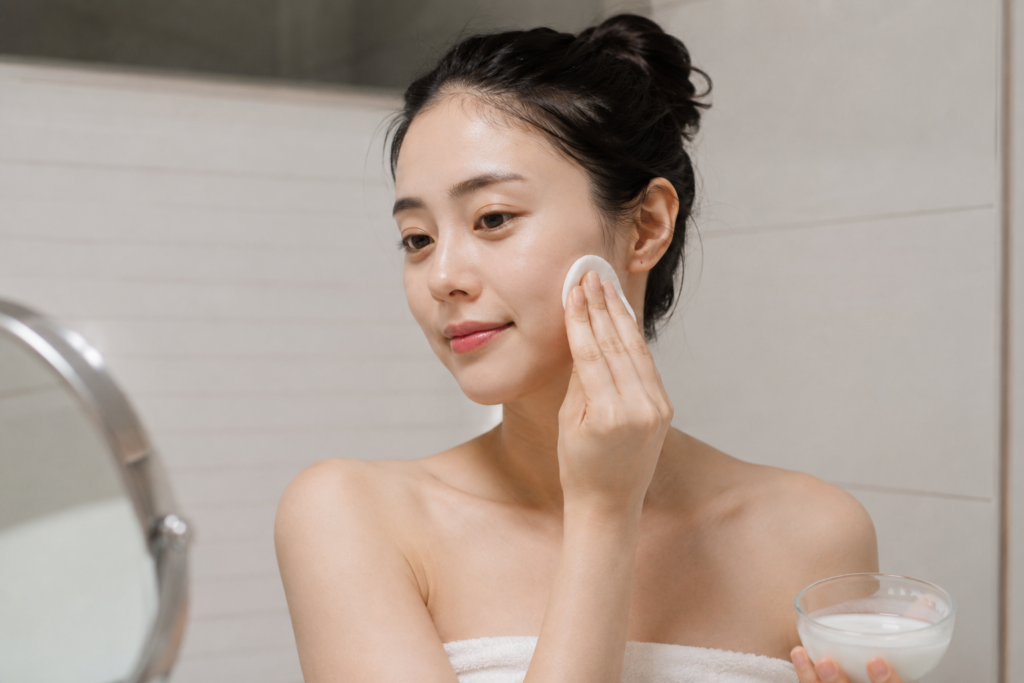
Table of Contents
- 1 The Simple Korean Skincare Ritual My Mom Taught Me at the Bathhouse
- 2 The Bathhouse Memories That Started It All
- 3 Why Milk May Be Good for Your Skin
- 4 3 Korean Milk Face Mask Recipes — You Can Do These at Home Too
- 5 Tips for Getting the Most Out of Your Milk Face Mask
- 6 F A Q
- 7 Open Your Fridge Tonight
The Simple Korean Skincare Ritual My Mom Taught Me at the Bathhouse
Everyone knows Cleopatra bathed in milk.
But in Korea, milk has been part of
everyday skincare in a much more
practical, accessible way — not as
a luxury, but as something you pick
up at the bathhouse counter, take
a sip of, and apply to your skin
with whatever’s left.
No expensive products.
No complicated steps.
Just one small carton of milk.
Today I want to share the Korean
milk face mask tradition — a beauty
ritual passed down through generations,
starting at the bathhouse. 🥛
The Bathhouse Memories That Started It All
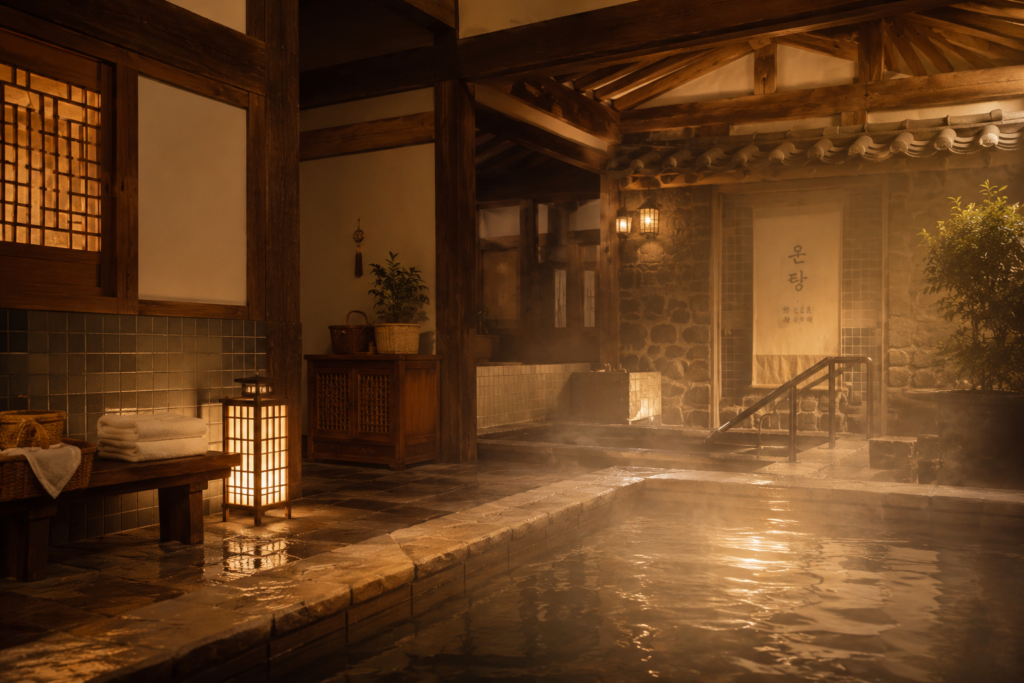
I was seven or eight years old.
Going to the neighborhood bathhouse
with my mom was just a normal part
of life.
Korean bathhouses — known as
mogyoktang — are public bathing
facilities that have been part of
Korean culture for generations.
Many Korean families visited together
regularly, treating it as a time
for both relaxation and self-care.
We’d sink into the warm water,
then make our way to the cold pool
to swim, then back to the hot water
again. That was just an ordinary
Korean afternoon.
Growing up, my family visited
the bathhouse together regularly.
And it was there that my mom
first showed me how to use milk
on my skin.
She’d buy a small carton of milk
sold at the bathhouse counter.
Take a sip first. Then after
washing her face, she’d rub
the rest gently over her face,
arms, and stomach.
That was it.
But walking out of the bathhouse,
my skin always felt different.
Softer. More hydrated.
Somehow more alive.
When I mentioned this to friends
from outside Korea, their reactions
were always the same.
“You buy milk at a bathhouse,
drink some of it, and put the
rest on your face?”
“Is that actually real?”
But anyone who has tried it knows.
It is. : )
Why Milk May Be Good for Your Skin
Cleopatra didn’t bathe in milk
just for the luxury of it.
Milk contains compounds that may
support skin health — and the
most notable one is lactic acid.
Key Compounds in Milk
Lactic acid is a naturally occurring
alpha hydroxy acid (AHA) found in milk.
It is widely used in skincare because
it may help gently remove dead skin
cells from the surface and improve
the overall texture of the skin.
Many professional skincare products
include lactic acid as a key active
ingredient — which tells you something
about how well-regarded it is in
modern skincare science.
Protein may help support the skin
barrier and leave skin feeling
noticeably softer to the touch.
Vitamin D is associated with
supporting overall skin health
and resilience over time.
Vitamin B12 may help support
a more even-looking skin tone.
Fat may help add a sense of
moisture and nourishment to
dry or dehydrated skin.
Curious about more Korean skincare
ingredients that actually work? →
5 Korean Skincare Ingredients
That Actually Work
Why Doing It After a Shower Makes a Difference
Applying milk right after a shower —
when the skin is still warm, soft,
and comfortable — allows it to sit
more evenly on the skin’s surface.
That’s why the milk always seemed
to feel more effective at the
bathhouse than anywhere else.
3 Korean Milk Face Mask Recipes — You Can Do These at Home Too
You don’t need to go to a bathhouse.
Your kitchen has everything you need.
Recipe 1. Basic Milk Face Mask — The Simplest Version
What you need:
3 to 4 tablespoons of whole milk,
at room temperature.
How to do it:
Soak a cotton pad with milk.
After cleansing, apply evenly
across the face. Leave on for
15 to 20 minutes. Rinse with
lukewarm water.
Doing this right after a shower,
when the skin is warm and soft,
may leave the skin feeling
more hydrated and comfortable.
Best for:
Dry skin, skin with visible texture,
uneven-looking skin tone.
This is part of my Korean home
care series. Start from the beginning →
Korean Cucumber Face Mask:
4 DIY Recipes for Glowing Skin
Recipe 2. Milk and Honey Mask — Boosted Hydration
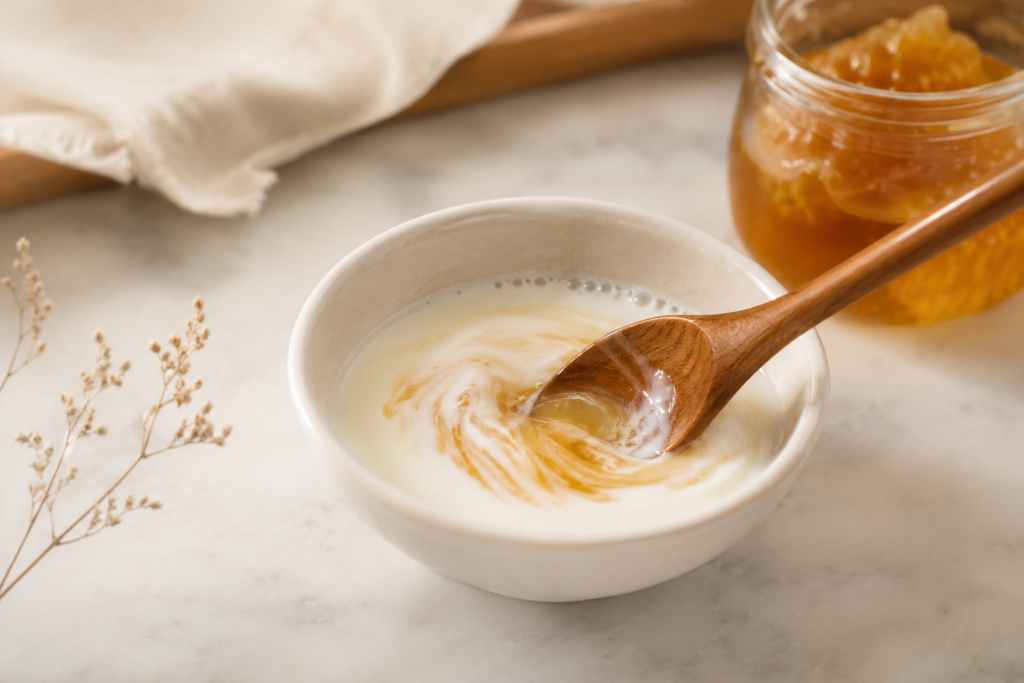
Adding honey brings extra moisture
to the calming, texture-smoothing
effect of the milk.
What you need:
2 tablespoons of whole milk
and 1 teaspoon of honey.
How to do it:
Mix the milk and honey until
evenly combined. After cleansing,
apply to the face. Leave on for
15 minutes. Rinse with lukewarm water.
This combination may be especially
helpful for skin that feels dry
and dehydrated during colder months.
Best for:
Very dry skin, skin that loses
moisture quickly, winter skincare.
Recipe 3. Milk and Oatmeal Mask — For Sensitive Skin
Oatmeal gently soothes the skin
while the milk adds hydration —
making this the gentlest version
of the three.
What you need:
3 tablespoons of whole milk
and 1 tablespoon of oat flour.
How to do it:
Mix the oat flour and milk into
a smooth paste. After cleansing,
apply evenly to the face. Leave on
for 15 to 20 minutes. Rinse with
lukewarm water.
Best for:
Sensitive skin, reactive skin,
skin that appears red or irritated.
Tips for Getting the Most Out of Your Milk Face Mask
Tip 1. Use Whole Milk
Whole milk has a higher fat content
than low-fat varieties, which may
leave skin feeling noticeably
more nourished and comfortable.
There’s a reason the milk sold
at Korean bathhouses is almost
always whole milk.
Tip 2. Apply Right After a Shower or Cleanse
When the skin is soft and comfortable
after washing, the milk can sit
more evenly on the surface.
That was the secret behind why
the bathhouse version always
felt so effective.
Tip 3. Keep It to 15 to 20 Minutes
Leaving the mask on too long can
cause it to dry out, which may
leave the skin feeling tight
rather than hydrated.
15 to 20 minutes is the right amount.
Tip 4. Follow Up With Your Skincare Routine
After the mask, while the skin
still feels soft and comfortable,
apply your toner and moisturizer.
Everything may feel more comfortable
and settled on the skin in that state.
F A Q
Q1. How often should I do a milk face mask?
Two to three times a week is
a good starting point. Because
lactic acid gently works on
the skin’s surface, doing it
too frequently may make the
skin feel sensitive. Pay attention
to how your skin responds.
Q2. What type of milk works best?
Whole milk is generally the best
option. Plant-based milks like
oat milk or soy milk can also
be used, though the experience
may feel slightly different.
Q3. What if I’m sensitive to dairy?
If you have a dairy allergy or
sensitivity, skip this one.
For anyone unsure, do a patch
test on the inner arm first and
wait 24 hours before applying
to your face.
Q4. Should the milk be warm or cold?
Room temperature milk generally
feels more comfortable on the skin.
Cold milk straight from the fridge
can feel refreshing in summer if
your skin feels warm or flushed.
Q5. Do I need to wash my face after the mask?
Yes — rinse thoroughly with
lukewarm water. Leaving milk
residue on the skin may cause
it to feel uncomfortable or
clog pores over time.
Open Your Fridge Tonight
If Cleopatra’s milk bath sounds
like something out of reach,
the Korean bathhouse version
is the everyday reality.
Not expensive. Not complicated.
Just milk from your fridge and
15 minutes of your evening.
The ritual my mom taught me at
the bathhouse all those years ago
still holds up today — because
the simplest things often do. 🥛
Have you ever tried a milk face mask?
Or if you’ve visited a Korean
bathhouse, did you know about
this tradition?
Let me know in the comments —
I’d love to hear your experience! ; )
Read the previous post in this series →
Korean Egg Face Mask:
Egg White vs Egg Yolk —
3 Recipes for Every Skin Type